- Apr 08, 2026
Iran-U.S.: Diplomacy vs. potential military threat
- Feb 25, 2026
- International
International Desk, PNN
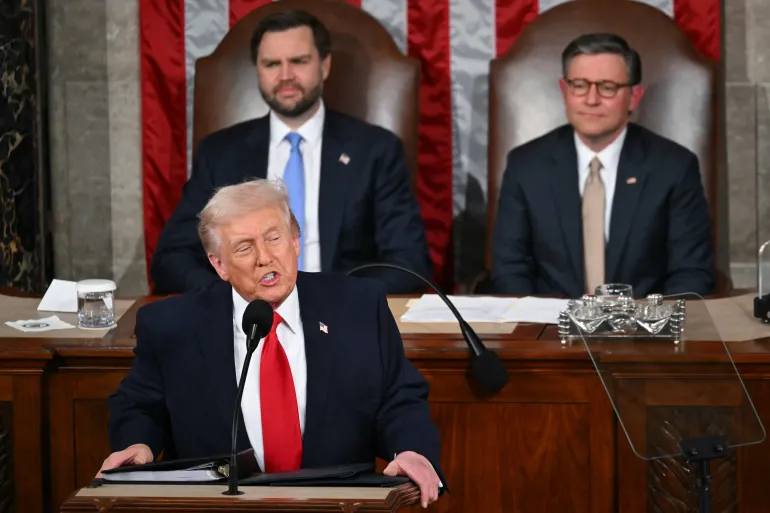
U.S. President Donald Trump informed Congress that he prefers diplomacy in resolving disputes with Iran. However, he also made clear his position on the possibility of military action against Iran. Trump claimed that Iran is developing missiles capable of striking the U.S. mainland.
In his annual State of the Union address to a joint session of the Senate and House on Tuesday, Trump described Iran as a “threat.” He said, “We have destroyed all of their previous missile and nuclear infrastructure, but they are restarting and advancing their harmful objectives. We are in talks with them, but we have yet to hear them clearly say, ‘We will never develop nuclear weapons.’ I will never allow the world’s foremost sponsor of terrorism to gain nuclear capability.”
Trump added, “I prefer diplomacy, but one thing is certain: Iran will never be allowed to develop nuclear weapons.” He cited U.S. military action in June 2025 and subsequent warnings to Iran, although Iran has repeatedly stated that its nuclear activities are solely peaceful and civilian in nature.
Trump accused Iran of targeting U.S. troops and civilians with roadside bomb attacks and killing thousands of protesters during recent anti-government movements.
Meanwhile, Iranian Foreign Minister Abbas Araghchi stated that an agreement to avoid war with the U.S. is now “within reach.” He tweeted, “Our main position is clear: Iran will never develop nuclear weapons, and we will not deprive our people of the right to peaceful nuclear technology. If diplomacy is prioritized, we can achieve a historic and unprecedented deal.”
These statements come at a time when U.S. military presence in the Middle East has increased, and preparations are underway in Geneva for the third round of indirect U.S.-Iran talks on Thursday. Trump’s representatives Steve Whitkoff and Jared Kushner, along with top Iranian officials, will participate.
The situation has placed U.S.-Iran relations at a crossroads of both diplomacy and potential military conflict. Experts believe that the actions of both sides over the coming weeks will determine whether tensions in the Middle East can be reduced.

প্লিজ লগইন পোস্টে মন্তব্য করুন!
আপনিও পছন্দ করতে পারেন
- Apr 04, 2026
Eight members of a family killed in earthquak...
- Apr 04, 2026
Iran executes two opposition group members; o...
- Apr 04, 2026
Fire at gas facility in UAE, 1 dead
- Apr 03, 2026