- Jul 15, 2026
Iran Claims Casualties in US Strikes, Tehran Warns of Retaliatory Response
- Jul 15, 2026
- International
International Desk | PNN
Relations between the United States and Iran have once again become tense after a renewed military confrontation, coming less than a month after hopeful developments towards peace.
The United States has imposed a fresh naval blockade on Iranian ports and announced new strikes on Iran’s coastal areas.
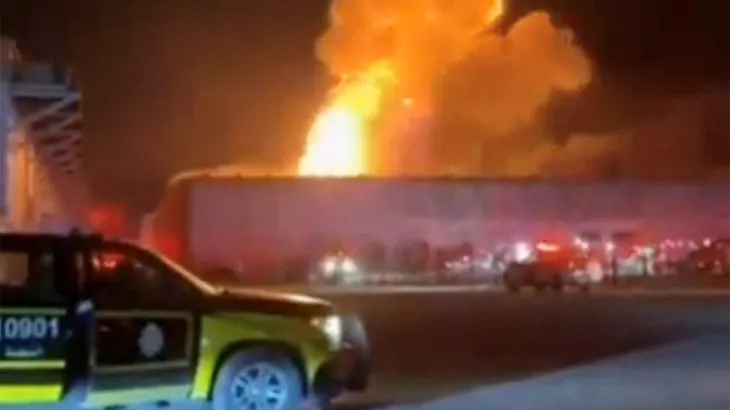
The US Central Command (CENTCOM) said on Wednesday that the latest military operation was carried out in response to Iranian attacks in the Strait of Hormuz. The operation targeted dozens of military facilities along Iran’s coastal areas and near the strategic waterway.
According to CENTCOM, the nearly seven-hour operation involved US fighter jets, drones, and naval forces. The targets included Iranian missile and drone facilities, naval capabilities, and coastal defence systems.
Following the operation, restrictions were imposed on vessels entering and leaving Iranian ports. The US move has triggered renewed tensions across the Gulf region.
However, Iran said its control over the Strait of Hormuz would not be affected under any circumstances.
Meanwhile, Iran’s Islamic Revolutionary Guard Corps (IRGC) claimed that it carried out retaliatory drone and missile attacks targeting US military facilities in Bahrain, Kuwait, and Jordan.
Iranian officials said the attacks were launched in response to the US strikes.
Iranian Health Ministry spokesperson Hossein Kermanpour said more than 260 people were injured in the US attacks. Tehran also claimed that more than 30 civilians were killed in the latest strikes.
According to Iranian media reports, a naval monitoring tower in Chabahar city in southeastern Iran was damaged in the missile strikes. Iranian authorities said the facility was used for maritime security operations and rescue activities for fishermen.
The impact of Iran’s retaliatory attacks was also felt in several Gulf countries.
Kuwait said it activated its defence systems in response to Iranian drone and missile attacks. The country’s defence ministry reported that four people were injured in an attack on a naval vessel.
Bahrain issued air raid warnings and urged citizens to remain in safe locations.
Jordan’s military said its air defence system intercepted four ballistic missiles launched from Iran.
Earlier, Iranian Deputy Foreign Minister Kazem Gharibabadi said the memorandum of understanding (MoU) signed with the United States was no longer effective.
Following the new blockade, the IRGC warned that oil and gas exports from the Middle East would either continue for everyone or stop for everyone.
Meanwhile, the US Treasury Department announced sanctions on several cryptocurrency wallets linked to Iran’s central bank, freezing assets worth more than $130 million.
Iran’s ambassador to the United Nations, Amir-Saeed Iravani, accused the United States of acting as an “aggressor”, claiming Washington failed to fulfil its commitments even after signing agreements and deliberately obstructed their implementation.
Analysts believe that the latest US military actions and Iran’s retaliatory response could deepen the crisis surrounding the Strait of Hormuz.
As one of the world’s most important energy transportation routes, instability in this region could have a major impact on global oil markets.

প্লিজ লগইন পোস্টে মন্তব্য করুন!
আপনিও পছন্দ করতে পারেন

- Jul 15, 2026
US Operation on Iran’s Coast, IRGC Claims Ret...
- Jul 11, 2026
Three More Children Die With Measles Symptoms...
- Jul 11, 2026
Cuba Plunged Into Darkness Again as Nationwid...
- Jul 11, 2026