- Apr 16, 2026
International Recognition vs. Domestic Crisis: Pakistan’s Dual Reality in 2025
- Dec 31, 2025
- International
International Desk: PNN
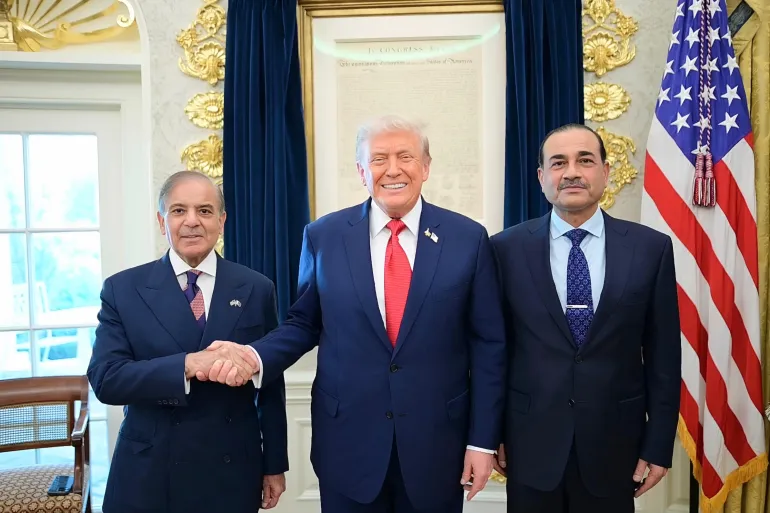
The year 2025 was a year of significant diplomatic shifts for Pakistan. Public praise from US President Donald Trump, short-lived military clashes with India, and active diplomatic engagements from the Middle East to South Asia brought Pakistan’s international position into renewed focus.
In late December, during a press conference at Mar-a-Lago, Florida, President Trump claimed that his leadership had helped prevent multiple wars. He credited himself with averting potential large-scale conflict between India and Pakistan, including a nuclear confrontation, citing the role of Pakistan’s military chief, Field Marshal Asim Munir, in saving millions of lives.
From June 2025 onwards, Trump publicly praised Asim Munir at least ten times, calling him “a great warrior,” “an extraordinary person,” or “my favorite field marshal.” In October, at a peace conference in Sharm El Sheikh, Egypt, concerning the Gaza ceasefire, Trump again publicly recognized Pakistan’s military chief.
Analysts say this close relationship reflects Pakistan’s recent diplomatic activism. Just a few years ago, US-Pakistan relations were fragile. However, in 2025, the relationship expanded beyond security cooperation to include economic discussions, natural resources, and new technology.
Many experts believe that the four-day military conflict between India and Pakistan in May was the main driver of this change. A deadly attack in Kashmir escalated tensions between the two nations into airstrikes, drone attacks, and missile exchanges. Ultimately, the conflict was halted through international mediation including the US. While India claims the war ended through bilateral talks, Pakistan openly acknowledged US involvement and even nominated Trump for the Nobel Peace Prize.
According to former Foreign Minister Khurram Dastgir Khan, “This conflict has changed the international profile of Field Marshal Asim Munir.” After the war, Munir was promoted to Field Marshal, only the second time in Pakistan’s history, and through constitutional changes, was given supreme authority over the three armed forces as Chief of Defence Forces. While this created domestic debate, Pakistan’s diplomatic activity on the international stage intensified.
In 2025, Pakistan actively worked to rebuild relations with Bangladesh, Central Asia, and Middle Eastern countries. High-level visits to Dhaka, defense agreements with Saudi Arabia, and balanced relations with Iran and other Gulf countries were undertaken.
However, alongside these diplomatic successes, internal criticism also grew. Human rights organizations and opposition parties accused the government of political repression, media control, and increasing security-related violence. Particularly, fatalities due to violence in western border regions reached a ten-year high in 2025.
Analyst Maria Rashid notes, “Internal crises are being overshadowed by international successes.” Supporters argue that Pakistan has regained global political significance in 2025, while critics fear that such rises could pose risks to the democratic framework, as in the past.
In summary, 2025 was a year of diplomatic revival for Pakistan, but also a time of domestic challenges, the long-term effects of which remain unclear.

প্লিজ লগইন পোস্টে মন্তব্য করুন!
আপনিও পছন্দ করতে পারেন

- Apr 16, 2026
South African opposition leader Julius Malema...

- Apr 16, 2026
Trump announces direct talks between Israeli...
- Apr 16, 2026
Controversy over voter list revision in West...
- Apr 15, 2026