- Apr 16, 2026
China’s stance amid U.S.–Venezuela tensions: Strong words but limited action
- Dec 30, 2025
- International
International Desk: PNN
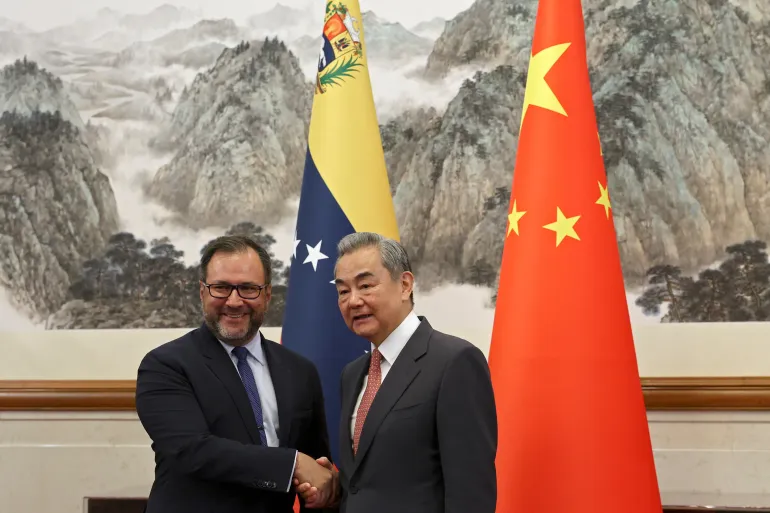
As the risk of war between Venezuela and the U.S. grows, China’s role has been in focus. Beijing has strongly criticized U.S. actions, including seizing Venezuelan oil tankers, attacking alleged drug trafficking vessels, and effectively blockading the coast, calling them unilateral and a violation of sovereignty and UN mandates.
On December 17, in a phone call with Venezuela’s foreign minister, Chinese Foreign Minister Wang Yi opposed U.S. “coercive policies” and supported Venezuela’s sovereignty.
However, China provided no tangible support on the ground. Analysts note that U.S. influence in Latin America makes Beijing cautious, highlighting China’s limited leverage. China is now the largest trade partner for South America and second-largest for Mexico, sourcing critical agricultural and mineral resources, and expanding in EVs and telecom.
Nevertheless, the U.S. historically regards Latin America as its sphere of influence, leading to concern over China’s growing presence. Despite being a major buyer of Venezuelan oil, China is not fully dependent on Venezuela, and analysts believe Beijing is unlikely to intervene militarily or economically.
China’s official stance emphasizes international law and multilateralism, but practically, no major steps to defend Venezuela are expected. U.S. aggression may expose China’s limits, forcing Latin American nations to recalibrate.
প্লিজ লগইন পোস্টে মন্তব্য করুন!
আপনিও পছন্দ করতে পারেন
- Apr 16, 2026
South African opposition leader Julius Malema...
- Apr 16, 2026
Trump announces direct talks between Israeli...

- Apr 16, 2026
Controversy over voter list revision in West...
- Apr 15, 2026