- Oct 31, 2026
77 Percent of Alberta Voters Back Remaining in Canada, Delivering Setback to Secession Movement
- Oct 20, 2026
- International
International Desk | PNN
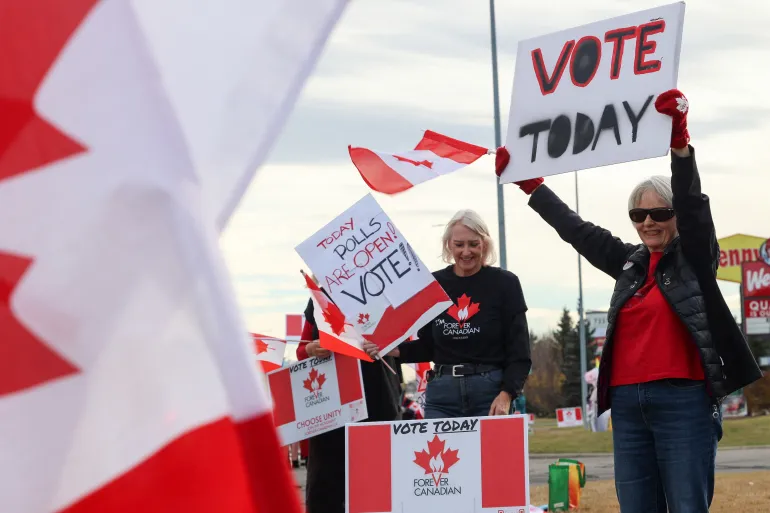
The majority of voters in Alberta have chosen to remain part of Canada rather than separate from the country. In preliminary results from the first secession-related referendum in the province’s history, approximately 77 percent of voters supported remaining in Canada. In contrast, 23 percent voted in favour of beginning the process of moving towards separation.
According to preliminary results released on Tuesday, this outcome emerged after more than one million votes had been counted. The vote held on Monday was not a direct referendum on declaring independence. Instead, it could have opened the way for a future referendum on Alberta’s separation from Canada.
Canadian Prime Minister Mark Carney welcomed the results. In a statement posted on the social media platform X, he said Alberta’s residents had clearly chosen unity. He added that their decision reflected a commitment to building the country together and standing by one another.
Carney has been working to preserve Canadian national unity amid an ongoing trade dispute with the United States. In this context, the outcome of Alberta’s vote is considered politically significant for his government.
Although the referendum did not produce a victory for secession, Jeffrey Rath, a leading figure in the separatist organisation Alberta Prosperity Project, has announced that the campaign for an independent Alberta will continue. Speaking to journalists, he said the movement had learned a great deal from the struggle and would continue pursuing independence.
Alberta’s conservative Premier, Danielle Smith, said she had personally voted against separating from Canada. However, she said the referendum had been organised to clarify public opinion on an issue that had divided the province for a long time. She had previously stated that a vote in favour of remaining in Canada would bring the question of separation to an end.
One of the main factors behind Alberta’s separatist movement is dissatisfaction over the oil industry. The Canadian province holds the world’s fourth-largest proven oil reserves. Opposition to federal government policies on oil production and the management of the industry is widely seen as a key factor behind growing support for separation.
Premier Danielle Smith had previously accused the government of former Prime Minister Justin Trudeau of attempting to restrict oil production and placing pressure on the industry through climate policies. In her view, these measures helped strengthen separatist sentiment in Alberta.
The demand for Alberta’s independence had also attracted interest from people close to US President Donald Trump. US Treasury Secretary Scott Bessent described Alberta as a “natural partner” for Washington. Elon Musk, one of the world’s wealthiest individuals and a supporter of Trump, also commented on X that Alberta should separate from Canada.
Since taking office, Canadian Prime Minister Mark Carney, who was born in Alberta, has sought to improve relations between the provincial and federal governments. He is working with Danielle Smith on an initiative to build a new pipeline to increase oil exports. The plan is intended to allow larger volumes of Alberta’s oil to reach markets outside the United States.
A pipeline project that faced significant obstacles during former Prime Minister Justin Trudeau’s administration has gained renewed importance under Carney, who is seeking to move it forward.
For now, the referendum results may slow the momentum behind calls for Alberta to separate from Canada. However, separatist leaders’ pledge to continue their campaign makes clear that debates over the oil industry, environmental policy and the province’s relationship with the federal government are far from over.

প্লিজ লগইন পোস্টে মন্তব্য করুন!
আপনিও পছন্দ করতে পারেন

- Oct 31, 2026
Senior Commander Siddig Ander Announces Depar...
- Oct 31, 2026
Fears of Halloween-Weekend Protests Prompt He...
- Oct 25, 2026
Hundreds of Thousands Protest Again in France...

- Oct 25, 2026