- Oct 31, 2026
Serbia Votes Amid Anti-Corruption Protests as Vucic Faces Growing Pressure
- Oct 25, 2026
- International
International Desk | PNN
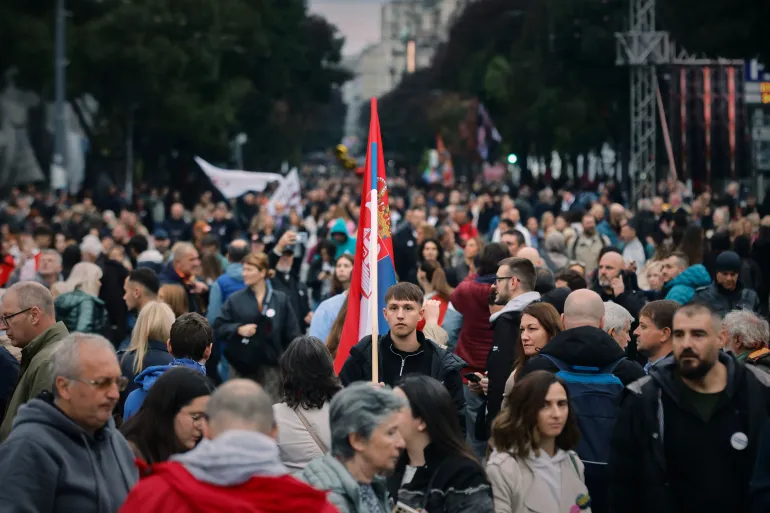
Voting has begun in Serbia's parliamentary election amid growing uncertainty over the political future of longtime populist leader Aleksandar Vucic. The election is taking place against the backdrop of a student-led anti-government movement that has continued for nearly two years. The “Student List” movement is challenging the ruling party, having gained substantial public support through its demands to end corruption, uphold the rule of law, and reform state institutions.
Vucic announced the snap election in September, with voting scheduled for Sunday, October 25. He has remained at the centre of Serbian politics for more than a decade, first as prime minister and later as president. Analysts believe a defeat for his party could bring significant political changes to the Balkan country, which has a population of approximately six million.
According to Al Jazeera, the student movement began after the collapse of a railway station canopy in the Serbian city of Novi Sad in 2024 killed 16 people. The tragedy sparked widespread anti-government protests, with demonstrators blaming corruption and mismanagement for the disaster. Protesters accuse the government of prioritizing the interests of those in power over the welfare of the public.
Initially led by students, the movement gradually developed into a broader social protest. Its central demands include effective action against corruption, improvements to the education system, the establishment of the rule of law, and stronger state institutions.
Jelena Vasiljevic, a senior researcher at the University of Belgrade's Institute for Philosophy and Social Theory, said Serbia's political landscape had undergone a grassroots transformation. According to her, young people who had long stayed away from politics are now at the centre of one of the country's largest social movements in decades.
The movement's political agenda has placed greater emphasis on fighting corruption and reforming institutions than on international relations. Issues such as relations with Russia, Serbia's accession to the European Union, and the normalization of relations with Kosovo, which declared independence in 2008, have received comparatively less attention in its campaign.
Despite the movement's challenges, analysts do not consider Vucic an easy opponent to defeat. Some of his supporters believe he has maintained economic progress and continued the modernization of Serbia.
During the election campaign, Vucic promised higher pensions and salaries for public employees, increased investment in public healthcare, and subsidies for young couples. He has also pursued a policy of strengthening economic ties with China, maintaining close relations with traditional ally Russia, and keeping the possibility of joining the European Union open.
However, relations between Serbia and the European Union have become increasingly strained under his leadership. According to the report, dissatisfaction within the bloc has grown because of insufficient progress in judicial reform, the rule of law, and efforts to combat corruption.
Vucic's Serbian Progressive Party (SNS) has long relied on an organized and disciplined support base. Researcher Vasiljevic said the party was also associated with a patronage-based political system in which various benefits were provided in exchange for political support.
Under these circumstances, the student movement faces the challenge of not only uniting opposition voters but also mobilizing people who do not regularly vote and those who remain undecided.
Opinion polls published before the election indicated a competitive race between the ruling party and the student movement. An Ipsos poll released on Thursday projected 47 percent support for the SNS and 40 percent for the student-backed list. However, several other surveys indicated that the student movement could be ahead.
Analysts believe voter turnout could play a decisive role in determining the result. If the student movement succeeds in bringing large numbers of young people and politically inactive voters to the polls, the balance of the contest could change.
According to the report, approximately 150,000 people gathered in the capital, Belgrade, last Thursday in support of the student movement. Meanwhile, government critics and rights activists have continued to allege that repression has intensified since the railway station canopy collapse.
Vucic and his party have denied allegations of corruption, repression against opponents, and surveillance. The former president has claimed that the student movement receives funding from foreign interests in Croatia and Montenegro. The protesters have rejected those allegations.
Polling stations opened at 7 a.m. local time and were scheduled to close at 8 p.m. Initial indications of the results were expected approximately two hours after voting ended, according to the report.
Through this election, Serbian voters will not only decide the composition of the new parliament but also signal whether they want the anti-corruption movement or the country's longstanding political leadership to shape its future. Whether the student movement can convert its broad public support into electoral success will depend on voter turnout and the final results.

প্লিজ লগইন পোস্টে মন্তব্য করুন!
আপনিও পছন্দ করতে পারেন

- Oct 31, 2026
Senior Commander Siddig Ander Announces Depar...
- Oct 31, 2026
Fears of Halloween-Weekend Protests Prompt He...
- Oct 25, 2026
Hundreds of Thousands Protest Again in France...
- Oct 25, 2026