- Apr 08, 2026
Scientific Progress in Space: New Discoveries Based on Over 4,400 Studies
- Dec 26, 2025
- Technology
Staff Report: PNN
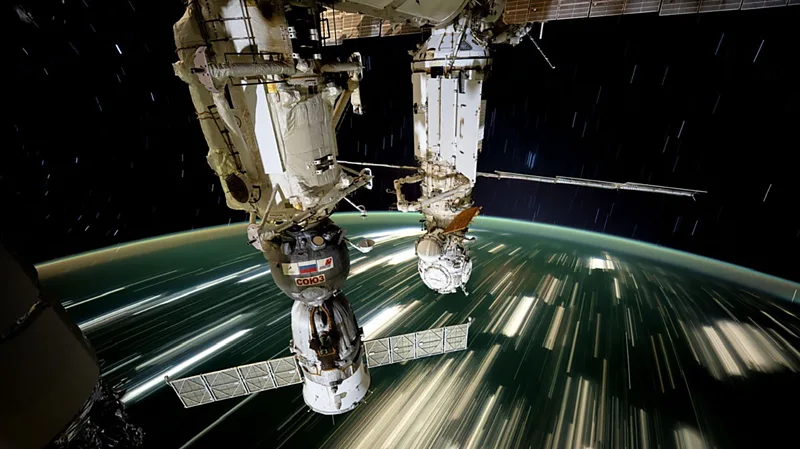
The International Space Station (ISS) orbits roughly 400 kilometers above Earth. It is the most expensive and complex engineering structure in human history, continuously supporting human habitation in space for 25 years. Since November 2, 2000, the ISS has never been unoccupied for a single day. That means every person born since then has lived in a world where someone has always been in space.
The station is a joint initiative by the United States, Russia, Europe, Japan, and Canada, exemplifying international cooperation. Its development, however, faced technical, financial, and political challenges.
The ISS’s oldest module, “Zarya,” was launched in 1998, marking the station’s beginning. The first crew of three—Bill Shepherd, Sergei Krikalev, and Yuri Gidzenko—arrived in 2000 when the station consisted of only three modules.
Building the 42-module station required over 40 spacecraft and assembly flights. The habitable interior of the ISS covers 388 cubic meters, roughly the size of a six-bedroom house, though concepts like walls, ceilings, and floors are almost meaningless in microgravity.
Astronauts exercise two hours daily to prevent bone and muscle loss. Nearly 98% of water from breathing, sweat, and urine is recycled for use. Over 4,400 studies conducted aboard the ISS have produced thousands of scientific papers in medicine, material science, and technology.
The oldest astronaut aboard the ISS was 70, demonstrating that skill, not age, is key in space missions. The longest continuous mission lasted 371 days. There are four toilets across four stations. In addition to 13 professional astronauts, 13 private participants (“space tourists”) have visited the ISS, all undergoing rigorous training.
The ISS experiences 16 sunrises and sunsets daily as it orbits Earth 16 times. Approximately $150 billion has been spent on its construction and operation. While its cost-effectiveness is debated, the ISS remains a landmark of scientific progress and international collaboration. Future space stations and lunar missions will continue, but the ISS will remain a historic chapter in human habitation in orbit.

প্লিজ লগইন পোস্টে মন্তব্য করুন!
আপনিও পছন্দ করতে পারেন

- Apr 04, 2026
Top-level reshuffle at OpenAI, several execut...

- Apr 04, 2026
AI companies’ race in private stock market: A...

- Apr 03, 2026
Amazon Imposes 3.5% Fuel Surcharge Due to Ira...
- Apr 03, 2026