- Jul 15, 2026
Pakistan Votes for U.S. Draft at UN but Remains Cautious
- Nov 22, 2025
- International
International Desk | PNN
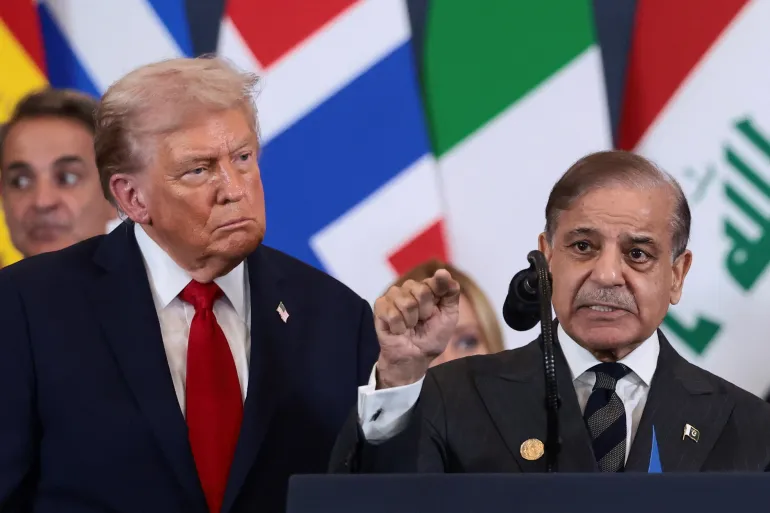
Islamabad: Pakistan voted in favor of the U.S.-proposed draft at the United Nations Security Council on Monday, aimed at creating an international transitional administration and an International Stabilization Force (ISF) for Gaza. However, Islamabad has taken a cautious stance on the issue.
Pakistan’s permanent representative, Asim Iftikhar Ahmed, thanked the United States as the presiding nation but noted, “While important proposals were made from our side, they have not been included in the final text.”
Although the draft mentions a “credible roadmap” for a Palestinian state, Pakistan considers it still unclear—particularly regarding the role of the United Nations, the newly proposed Board of Peace (BoP), and the ISF’s executive framework.
Nonetheless, Pakistan’s previous support for U.S. President Donald Trump’s 20-point plan and recent diplomatic engagement with other Middle Eastern allies have positioned Islamabad at the center of this initiative, according to analysts.
Since the Israel-Hamas war, Pakistan’s high-level diplomatic coordination with Jordan, Egypt, and Saudi Arabia has increased. Jordan’s King Abdullah II recently visited Islamabad and met with Pakistan’s Army Chief Field Marshal Asim Munir.
Following the signing of the Strategic Mutual Defense Agreement (SMDA) with Saudi Arabia in September, it is expected that Riyadh may seek Islamabad’s military support to manage the post-Gaza situation.
The Palestinian issue is extremely sensitive in Pakistan. Any military or technological coordination with Israel—whether overt or covert—could provoke political controversy, analysts say.
Defense Minister Khawaja Asif stated, “It would be a matter of pride for Pakistan to play a role in humanitarian efforts in Gaza.” However, he clarified that decisions would require consultation with parliament and national security policymakers.
Analysts note that without clear explanations of the ISF’s structure, rules, and role, it will be difficult for Pakistan to make decisions. Former Lieutenant General Muhammad Saeed emphasized, “Such sensitive decisions cannot be taken secretly. Final decisions depend on open discussions in parliament and the National Security Council.”
Some U.S.-based reports suggest Pakistan, Azerbaijan, and Indonesia could form the main contingents of the ISF. However, details such as troop numbers and command authority remain undecided.
Given economic challenges, strengthening relations with the U.S. and Gulf allies is important for Pakistan—military contributions could enhance its diplomatic standing. Conversely, coordination with Israel could risk public disapproval.
Nearly 90 percent of people in Gaza have been displaced; thousands of families remain under rubble and uncertainty. The effectiveness of the international peacekeeping force will depend on the political will, realistic objectives, and local acceptance of the involved countries.
Pakistan’s final decision will be revealed after further diplomatic discussions, but Islamabad has already entered a delicate political balancing act, where every step carries significant weight.

প্লিজ লগইন পোস্টে মন্তব্য করুন!
আপনিও পছন্দ করতে পারেন

- Jul 15, 2026
US Operation on Iran’s Coast, IRGC Claims Ret...

- Jul 15, 2026
Iran Claims Casualties in US Strikes, Tehran...

- Jul 11, 2026
Three More Children Die With Measles Symptoms...
- Jul 11, 2026