

- Apr 30, 2026
Staff Reporter | PNN
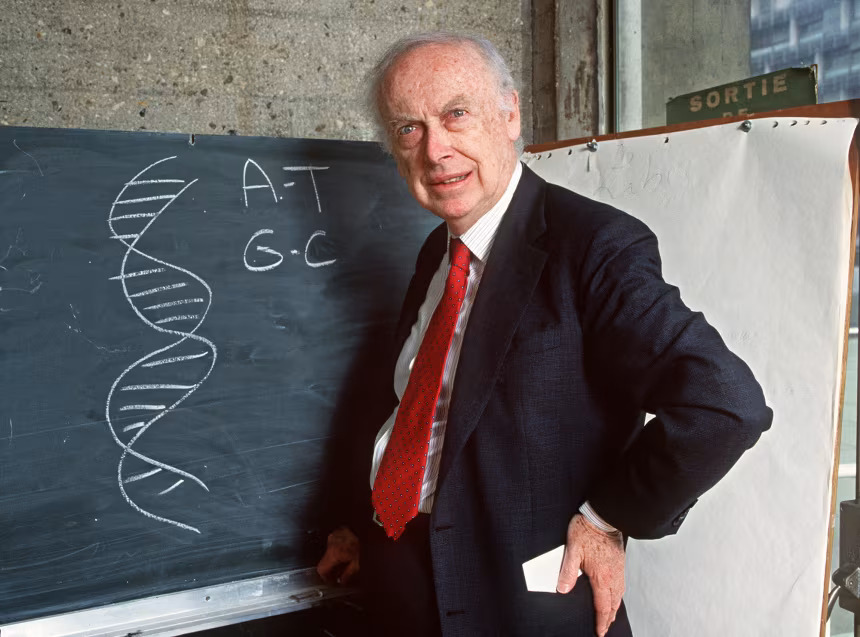
James Watson, the American scientist who co-discovered the structure of DNA, has died at 97 after a brief illness, according to his longtime workplace, Cold Spring Harbor Laboratory.
Watson won the 1962 Nobel Prize in Physiology or Medicine for revealing DNA’s double-helix structure — a milestone that revolutionized biology — along with Francis Crick and Maurice Wilkins.
Born on April 6, 1928, in Chicago, Watson showed an early fascination with nature. After skipping two years of high school, he entered the University of Chicago, later earning his Ph.D. in zoology from Indiana University, where his passion for biology deepened.
In 1951, Watson joined Cambridge University’s Cavendish Laboratory in England, where he met Crick and Wilkins. Their collaborative research unveiled the “secret of life” — the molecular structure of DNA.
Alongside his scientific work, Watson was a prolific author. His textbook Molecular Biology of the Gene remains a staple in universities worldwide. He served as director of Cold Spring Harbor Laboratory for 25 years, elevating it to a globally renowned research center.
In the 1990s, Watson became the first director of the Human Genome Project, initiating the effort to map the entire human genome.
However, his later years were marred by controversy over racially and gender-biased remarks, leading to the loss of several honorary titles. In 2014, he sold his Nobel medal to fund scientific research, though a Russian philanthropist later returned it to him.
James Watson remains one of the most talked-about figures in science — celebrated for groundbreaking discoveries yet criticized for his views. His work on DNA continues to underpin modern genetics and biology.