- Nov 03, 2026
Kajol Has Spent 21 Years Supporting People with Mental Health Conditions Despite Limited Income
- Oct 25, 2026
- Bangladesh
PNN News Desk | Kurigram
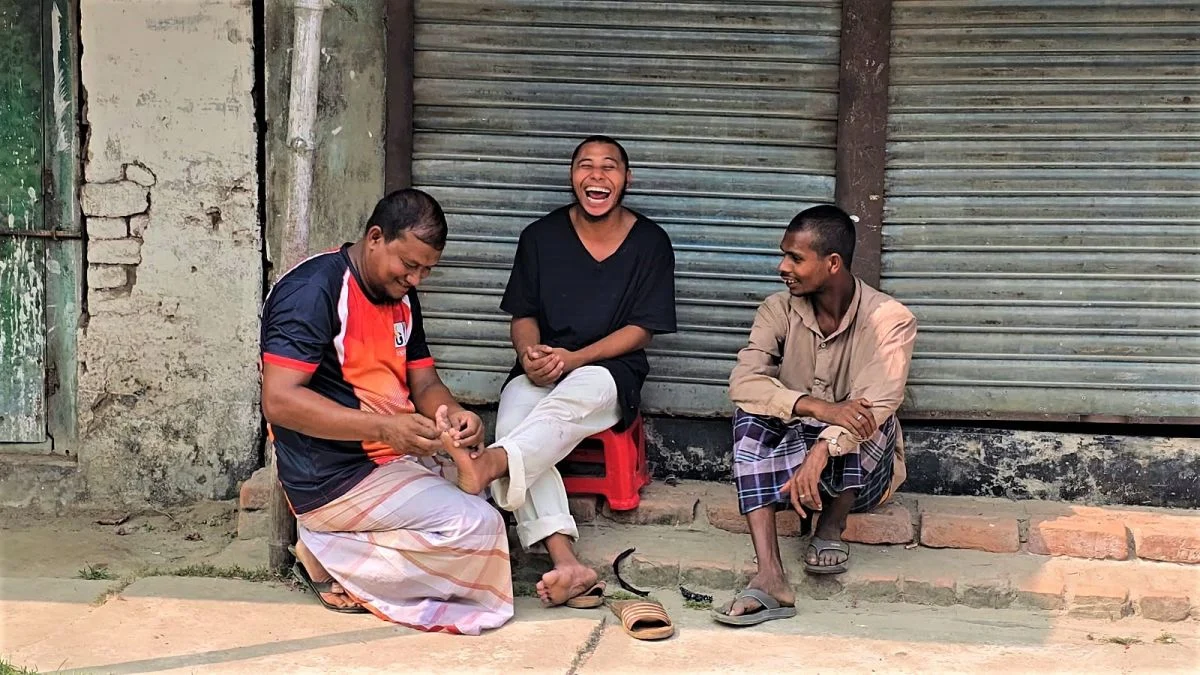
He runs a small shop, and the income he earns from it is what keeps his household going. Yet Raihanur Rahman Kajol, a resident of Rajarhat Upazila in Kurigram, has never stepped back from helping vulnerable people and those living with mental health conditions. Sometimes he bathes them, sometimes trims their fingernails and toenails, and at other times feeds them with his own hands. When necessary, he buys them new clothes. He expects nothing in return. For him, the sight of a little relief and a smile on their faces is enough.
For nearly 21 years, the 39-year-old Kajol has quietly devoted himself to humanitarian work. Despite his limited financial means, his unusual initiative has become a remarkable example of compassion and humanity for people in the local community.
Kajol lives in Betubari village in Nazimkhan Union of Rajarhat Upazila. His father was the late Gamir Uddin Ahmed, and his mother is Shaher Banu. He runs a small shop selling bran, fish feed and related products at Nazimkhan Bazar. The income from the business supports his family. Despite these limited earnings, he spends approximately Tk 3,000 every month caring for vulnerable people.
Kajol’s journey of compassion began in 2005. As a child, when he accompanied his father to Nazimkhan Bazar, he would often see people with mental health conditions wandering around in unclean clothes. Some had overgrown fingernails and toenails, while others had unkempt hair and beards. Many lacked access to proper food and basic personal hygiene.
These scenes troubled him. He began wondering whether anyone was willing to stand beside people who could not adequately care for themselves. That thought gradually inspired him to start helping them. Later, after opening his own shop at Nazimkhan Bazar in 2011, he began carrying out these activities more regularly.
Since then, Kajol has continued to provide assistance according to his means. His efforts include bathing people, trimming their nails, cutting their hair and beards, feeding them and purchasing new clothes for them. He said he has provided various forms of assistance to approximately 120 people so far. At present, he regularly looks after four individuals.
The greatest source of encouragement throughout Kajol’s long humanitarian journey has been his wife, Marufa Akter Lipi. In addition to encouraging her husband’s initiative, she also arranges meals at home for vulnerable people whom he sometimes brings there.
Marufa Akter Lipi said, “I always encourage my husband. Sometimes he brings several people home, and I feed them. I think very positively of what he does.”
Despite the household’s limited income, their combined efforts have created a small haven of humanity—one where people receive care instead of neglect and develop relationships of trust and belonging instead of being kept at a distance.
One of the most moving examples of Kajol’s compassion is a young man named Russell. Kajol has provided shelter to Russell, who has an intellectual disability, for nearly 10 years. He also takes responsibility for Russell’s food, clothing and daily care, covering the expenses himself.
Russell cannot dress himself properly, so Kajol helps him put on his clothes and assists him with everyday needs. His support extends beyond providing food, shelter and personal care. Kajol has also enrolled Russell in school. Whenever he attends an invitation or social gathering, he takes Russell along with him. He looks after the young man as if he were his own child.
Kajol’s dedication has also drawn the attention of local business owners and residents. Md. Emdadul Haque, 55, who owns a tailoring shop near Nazimkhan Bazar, said that whenever people with mental health conditions arrive at the market from different areas, Kajol looks for them and checks on their needs.
“Russell is always with him. Russell cannot even put on his clothes by himself. Kajol does everything for him. He takes care of him just like his own child,” Haque said.
Md. Reza, a resident of Ramkrishna village, said he had seen Kajol helping people in this way since childhood. According to him, whenever such individuals arrive at the market, Kajol brings them close, trims their fingernails and toenails, bathes them, feeds them and then helps them on their way.
Abdur Sabur Mondal, 60, a resident of Nazimkhan Union, said, “We are able to maintain our personal hygiene and cleanliness because we understand what needs to be done. But people with mental health conditions often cannot understand these things. Kajol helps them stay clean. I consider this a commendable effort.”
Md. Abdur Rashid, head teacher of Nazimkhan Salamia Noorani and Hafizia Madrasa, also praised Kajol’s initiative. He said he had watched Kajol remain engaged in humanitarian work for many years. While many people in society avoid individuals with mental health conditions, Kajol has welcomed them and treated them as his own.
Asked why he had continued taking on this responsibility for so many years despite his limited financial resources, Kajol said, “I consider them my own people. They have limited intellectual abilities. I do these things from my heart. I feel inner satisfaction when I care for them. As long as I live, I will continue this work.”
Upazila Social Services Officer Mosa. Bobita Khatun described Kajol’s initiative as an outstanding example of humanity. She said standing beside vulnerable people and those with mental health conditions and providing them with care is a noble undertaking. At a time when many people avoid or neglect them, those who embrace them with compassion are the true friends of society.
Kajol’s life demonstrates that humanitarian service does not depend on the backing of a large organisation or substantial financial resources. Rather, conscience, compassion and a sense of responsibility towards others can be the greatest sources of strength. With his small shop and limited income, he may not be able to transform society as a whole. But for the people he has helped, he has become a familiar and dependable presence—a person they can turn to for care, dignity and support.

প্লিজ লগইন পোস্টে মন্তব্য করুন!
আপনিও পছন্দ করতে পারেন


- Nov 03, 2026
Police Officer Beaten During Clashes in Kalsh...

- Nov 03, 2026
Wife Murdered After Urging Husband to Quit Dr...
- Nov 03, 2026
Garment Workers Continue Protests Demanding T...

- Nov 03, 2026