- Apr 30, 2026
Iran warns of severe punishment for protesters, nationwide internet still restricted
- Jan 20, 2026
- International
International Desk, PNN
Iran continues to announce strict punishments for individuals arrested during recent widespread protests across the country. At the same time, tensions are rising between Tehran and Washington over former U.S. President Donald Trump’s statements. Meanwhile, internet connectivity across Iran remains almost completely cut off.
Chief Justice Gholam-Hossein Mohseni-Ejei stated in a message on the social media platform X on Monday that the judiciary’s actions regarding the recent situation have now fully begun. He claimed that granting leniency to those deemed undeserving would be against justice. At the time of his comment, internet access was shut down across most parts of the country. Although partial connectivity briefly returned on Sunday, it was again disrupted.
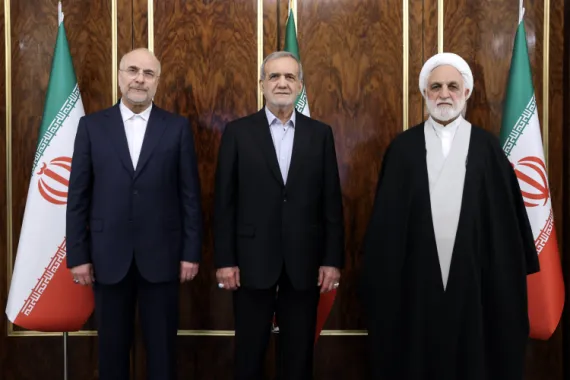
Ejei recently met with President Masoud Pezeshkian and Parliament Speaker Mohammad Bagher Ghalibaf. After the meeting, a joint statement released by state media indicated that strict measures would be taken against so-called “murderous and terrorist agitators,” though there were suggestions that “Islamic compassion” might be shown to those allegedly influenced by foreign powers.
Meanwhile, former U.S. President Trump last week claimed that the Iranian government had refrained from executing around 800 people and praised this decision. Earlier, he had warned that the United States could resort to military action if a genocide occurred in Iran.
The Iranian government, as usual, has accused the United States and Israel of supporting the protests. On Saturday, Supreme Leader Ayatollah Ali Khamenei admitted that “thousands of people” had died during the protests, though the government claims these killings were not carried out by state forces but rather by groups associated with foreign powers.
The protests began on December 28 in Tehran’s central area with demonstrations by shopkeepers. Since then, thousands of people have been arrested across the country. Every day, state authorities report new arrests.
Iran’s Ministry of Intelligence has reported detaining members of a “terrorist group” entering through the western border. Additionally, reports indicate arrests in Kerman, Isfahan, Mazandaran, Shiraz, and Bandar Anzali.
Police Chief Ahmadreza Radan stated that protesters who joined the movement due to misinformation could reduce their punishment if they surrender within three days. However, he warned that rioters and terrorists would be brought under the law until the last individual.
In recent days, state television has broadcast numerous “confessions” of detainees, a practice long criticized internationally.
The Iranian government has also announced that it will hold protest supporters accountable for financial damages caused during the protests. Chief prosecutor Mohammad Mohahedi Azad stated that compensation would be collected according to the law. Several business owners’ assets and popular cafes have already been seized, including a café owned by former national footballer Voria Ghafouri.
Former President Trump recently called for the end of Khamenei’s long rule in Iran, provoking a strong response from Tehran. Iran’s Guardian Council described Trump’s statements as “indecent and baseless” and warned that any action against the Supreme Leader would cross a “red line.”
It remains unclear when internet restrictions in Iran will be fully lifted. The President’s science and technology advisor, Hossein Afshin, stated that restrictions may gradually ease by the end of the current week.

প্লিজ লগইন পোস্টে মন্তব্য করুন!
আপনিও পছন্দ করতে পারেন
- Apr 30, 2026
Israeli forces block aid convoy in internatio...
- Apr 30, 2026
Pakistan launches six transit routes for Iran...
- Apr 30, 2026
Press freedom at its lowest level in 25 years...
- Apr 29, 2026