- Apr 29, 2026
Iran and Russia focus on alternative trade routes amid Hormuz Strait crisis
- Apr 29, 2026
- International
International Desk: PNN
Amid a prolonged blockade in the Strait of Hormuz and rising tensions in the Middle East, Iran’s economy is facing increasing pressure. In this situation, Tehran is shifting its focus away from dependence on Gulf maritime routes and moving toward alternative land and rail-based trade routes with Russia.
According to analysts, disruptions in maritime shipping have led Iran to rely more on the Caspian Sea-based railway network, the North-South Transport Corridor, and post-sanctions alternative trade systems.
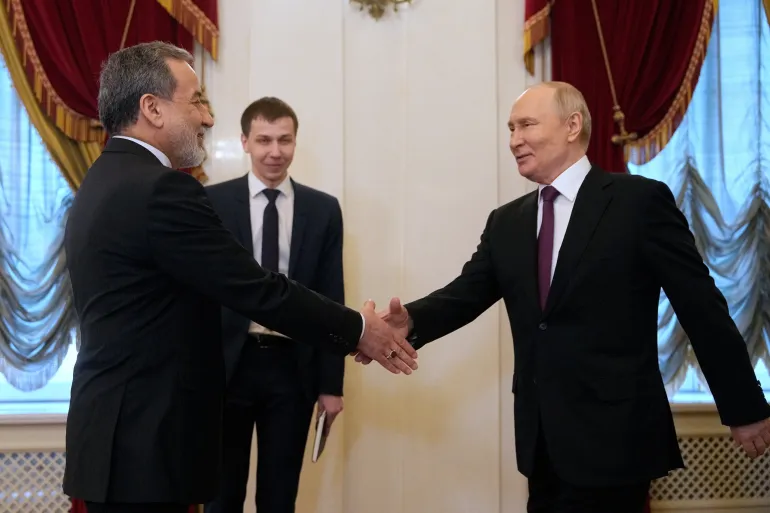
In this context, Iran’s Foreign Minister recently met Russian President Vladimir Putin in Saint Petersburg. During the meeting, he described bilateral relations as “strong and unshakable” and discussed trade, sanctions, and regional security issues.
Experts say that since the United States withdrew from the nuclear deal in 2018, Iran-Russia economic relations have gradually strengthened. After the Russia-Ukraine war began in 2022, both countries moved toward alternative financial and trade frameworks due to Western sanctions.
Currently, trade between Iran and Russia includes agricultural products, grain, metals, machinery, and industrial raw materials. Discussions have also included military equipment and drone technology exchange.
According to Russian officials, bilateral trade has reached several billion dollars, but it remains far below Iran’s major trade partners such as China and Gulf countries.
Economists say that due to similar industrial structures, large-scale trade expansion between the two countries is limited. As a result, Russia cannot fully serve as an alternative economic support system for Iran.
Meanwhile, the International North-South Transport Corridor (INSTC) is being viewed as the main alternative trade route. Through this corridor, goods are transported from southern Russia via the Caspian Sea to Iran and then by land to Middle Eastern and Asian countries.
Experts say that while this corridor is effective as an alternative to maritime routes, it cannot fully replace sea trade capacity. The volume of trade through the Strait of Hormuz is much larger than what land routes can handle.
They note that around 90% of Iran’s total international trade depends on sea routes, which cannot be shifted overnight to land transport. This may increase transportation costs and slow supply chains.
On the other hand, Russia itself is facing economic pressure and international sanctions, limiting its ability to provide large-scale support to Iran, analysts say.
Overall, although Iran-Russia strategic ties are becoming closer, the rail and land routes remain limited in capacity as alternatives to the Hormuz crisis, according to international experts.

প্লিজ লগইন পোস্টে মন্তব্য করুন!
আপনিও পছন্দ করতে পারেন
- Apr 29, 2026
Trial begins for four Indonesian soldiers in...
- Apr 29, 2026
Israeli strikes in southern Lebanon kill five...
- Apr 19, 2026
Mexico, Brazil, and Spain announce increased...
- Apr 19, 2026