- Jul 06, 2026
Guinea-Bissau military claims ‘full control,’ president and opposition leader detained
- Nov 27, 2025
- International
International Desk, PNN
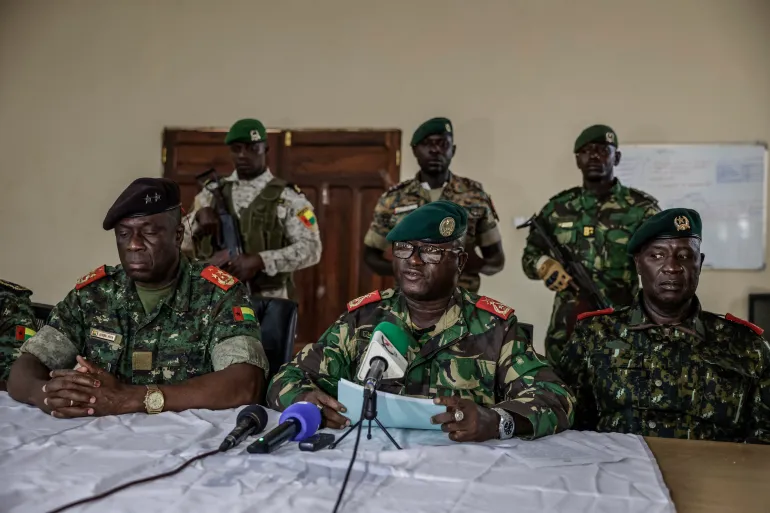
Tensions around Guinea-Bissau’s presidential election escalated as a group of military officers announced they were taking control of the government. Identifying themselves as the “High Military Command for the Restoration of Order,” they stated on national television that the election process would be suspended “until further notice.”
Following the announcement, all land, air, and sea borders were closed, and a curfew was imposed at night. Gunfire was heard near the electoral commission office, the presidential palace, and the interior ministry on Wednesday morning, shortly before the military declared its takeover.
President Umaro Sissoco Embaló told French media, “I have been deposed. I am still at the military headquarters.” Neighboring Senegal reported via Al Jazeera that Embaló had been detained. Additionally, the leader of the main opposition party PAIGC, Domingos Simões Pereira, was also arrested by the military. Attempts were also reportedly made to cut off internet access in the country.
The military coup was led by Denis N’Canha, previously the president’s security chief. Analysts note the irony: “The person responsible for protecting the president has now detained him.”
Both Embaló and his main rival Fernando Dias had claimed victory before the election results were announced. No party could provide sufficient evidence to support their claims.
Civil society groups and observers questioned the election’s legitimacy, as some parties were barred from participating. Since gaining independence from Portugal in 1974, Guinea-Bissau has experienced multiple coups and episodes of violence. After the 2019 election, there was a four-month power struggle.
With fears of a deadlock in this week’s election, the military intervened. The West African regional bloc ECOWAS and the African Union have expressed deep concern about the military action. They emphasized that both candidates had pledged to respect the people’s vote.
Observers, including former presidents Filipe Nyusi of Mozambique and Goodluck Jonathan of Nigeria, urged supporters to remain calm and called for the release of the detained leaders. United Nations Secretary-General António Guterres also expressed deep concern and called for restraint and respect for the rule of law. The Portuguese government emphasized the need to maintain the normal functioning of state institutions to continue the democratic process.

প্লিজ লগইন পোস্টে মন্তব্য করুন!
আপনিও পছন্দ করতে পারেন
- Jul 06, 2026
China Tests Missile from Nuclear Submarine, R...
- Jul 06, 2026
Deadly Prison Clash in Sri Lanka Leaves at Le...
- Jul 06, 2026
Heavy Russian Missile and Drone Attack on Kyi...
- Jul 03, 2026