- Jun 20, 2026
Discovery of a New Dwarf Planet Sparks Global Scientific Excitement
- Jun 14, 2025
- Technology
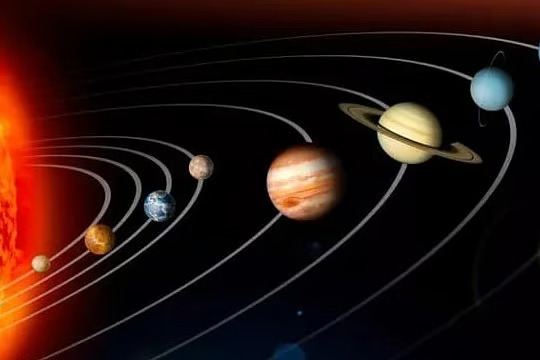
A recent astronomical breakthrough has captivated scientists and space enthusiasts worldwide. Astronomers have discovered a new dwarf planet on the outskirts of our solar system, triggering widespread curiosity not only in the field of astrophysics but also among the general public. Researchers believe this marks the beginning of a new chapter in our understanding of the solar system and the universe beyond.
The newly identified dwarf planet is located in the Kuiper Belt, a vast icy region beyond Neptune's orbit. This area is home to many small, planet-like celestial bodies, including Pluto. However, the newly discovered dwarf planet appears to be somewhat unique compared to others in this region.
According to experts, this planet is relatively larger than typical Kuiper Belt objects and contains unusual chemical components on its surface. Evidence of ancient ice, ammonia, and even potential organic compounds—which are fundamental building blocks of life—have been detected.
NASA astronomer Dr. Elena Martinez stated,
“Discoveries like this confront us with one of our most profound questions—is there a possibility of life beyond Earth? This dwarf planet may bring us closer to finding that answer.”
The topic of dwarf planets has been a subject of debate ever since Pluto was reclassified from a full planet to a dwarf planet in 2006. The discovery of this new object has reignited that global conversation.
Countries like the United States, Japan, and members of the European Union have already begun analyzing satellite data to further study the newly discovered body. Scientists hope that robotic missions to the planet may be feasible in the coming years.
While scientists focus on research, the planet is also generating significant buzz across social media. Discussions range from potential names for the new world to speculation about future human exploration. Many are calling it a “second Pluto,” while others have launched online petitions to name it “Mini Pluto.” Young people, especially children, are already creating stories and imaginative theories inspired by the discovery.
Researchers believe this new planet could provide deeper insight into the formation and history of our solar system, and may even reshape our thoughts about the origin and spread of life.
The official name and classification of the new dwarf planet is expected to be announced next month by the International Astronomical Union (IAU).

প্লিজ লগইন পোস্টে মন্তব্য করুন!
আপনিও পছন্দ করতে পারেন


- Jun 20, 2026
New risk in digital wallets as card provision...

- Jun 18, 2026
Delivery robot revolution raises global conce...

- Jun 18, 2026
Security concern: Researchers claim harmful i...

- Jun 17, 2026