- Jul 15, 2026
China’s Influence Grows in Africa: U.S. Boycott Creates New Geopolitical Equation
- Nov 21, 2025
- International
International Desk, PNN
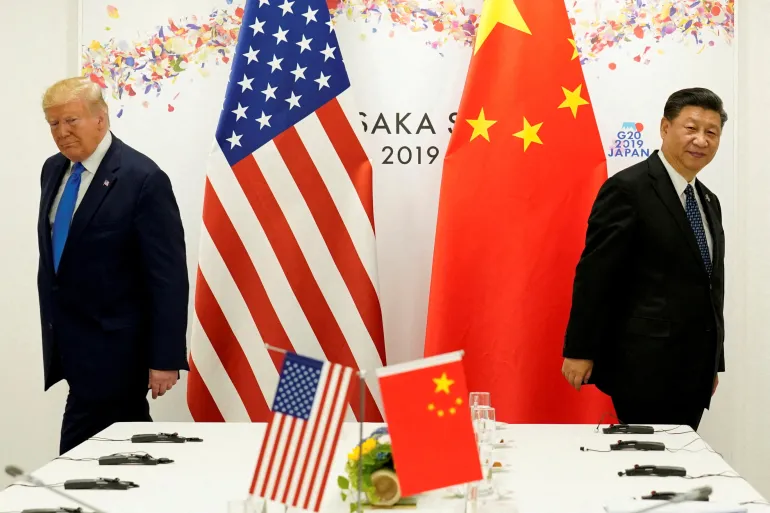
The absence of the United States at this year’s G20 summit in Johannesburg, South Africa, has created a new geopolitical scenario. Experts say Washington’s decision provides additional opportunities for China to expand its growing influence across Africa.
The U.S. announced it would not attend the two-day summit, citing “unfair treatment” of the white population in South Africa. South African President Cyril Ramaphosa called this “baseless,” stating, “Boycotting does not solve problems. As the world’s largest economy, the U.S. should play its expected role, which it is avoiding.”
Meanwhile, China’s Prime Minister Li Qiang will lead the Chinese delegation in place of President Xi Jinping, who has reduced foreign trips in recent years and entrusted responsibilities to top diplomats.
Zhiqun Zhu, a political analyst at Bucknell University, said, “The absence of the U.S. presents a diplomatic opportunity for China. When Washington steps back, countries present look to Beijing and the European Union for leadership.”
However, experts note that while China’s presence is more visible without the U.S., it does not immediately alter the U.S.-centered global system. Jing Gu, an economist at the UK’s Institute of Development Studies, said, “This does not automatically give China global leadership, but it allows Beijing to present itself as a stable and reliable partner.”
This year’s G20 summit includes the African Union as a full member for the first time and is being held on African soil. South Africa aims to focus discussions on climate change, debt crises, sustainable energy, and economic growth—all aligning with China’s interests.
China is currently Africa’s largest trading partner. Recent initiatives—Li Qiang’s visit to Zambia, the $1.4 billion Tanzania-Zambia railway development deal, and a 60% increase in solar panel imports to Africa—highlight China’s strengthening economic presence on the continent.
With the U.S. absent from recent summits such as APEC and COP30, China is attempting to position itself as a “guardian of the multilateral world system.” Promises of duty-free access for African countries, support for sustainable development, and climate initiatives collectively showcase China as counterbalancing U.S. influence on the global stage.
Rosemary Foot, a professor at Oxford University, noted, “The U.S. absence gives China an opportunity to present itself as a responsible and stable power. However, it is still uncertain how much influence China can exert on the summit’s agenda.”
Experts agree that although the U.S. seat is vacant at the G20, China still has a long way to go to dominate global diplomacy. Nevertheless, this year’s summit could be a significant opportunity to showcase Beijing’s strategic resilience.

প্লিজ লগইন পোস্টে মন্তব্য করুন!
আপনিও পছন্দ করতে পারেন

- Jul 15, 2026
US Operation on Iran’s Coast, IRGC Claims Ret...

- Jul 15, 2026
Iran Claims Casualties in US Strikes, Tehran...

- Jul 11, 2026
Three More Children Die With Measles Symptoms...
- Jul 11, 2026