- Jun 17, 2026
Iranian Politics Divided Over Possible Agreement With the United States Amid Economic Pressure
- Jun 17, 2026
- International
International Desk | PNN
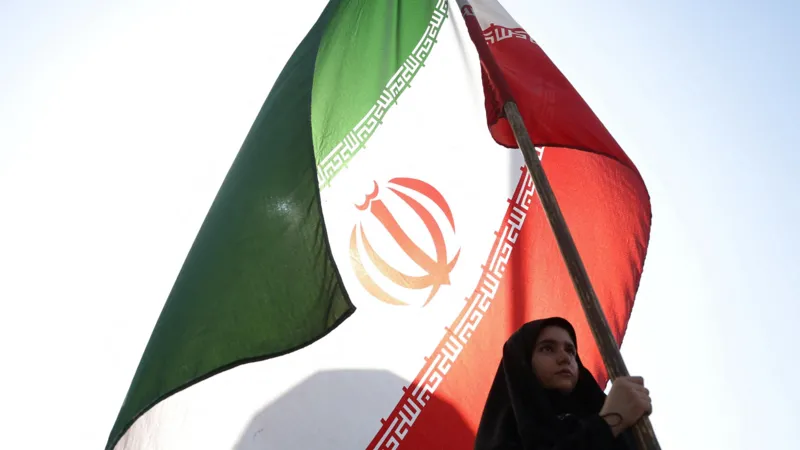
A new debate has emerged in Iran’s political landscape over a possible memorandum of understanding (MoU) with the United States. While the country’s leadership is attempting to present the agreement as a diplomatic victory, internal criticism and opposition views are making the issue increasingly complex.
Standing amid long-term economic crisis, international sanctions, and recent conflict pressures, Tehran is trying to establish the narrative that reaching the negotiation table is not surrender but rather a result of resistance.
Iranian Parliament Speaker Mohammad Bagher Ghalibaf described progress on the agreement as “a major step toward final victory.” Similarly, President Masoud Pezeshkian said that if the agreement is fully implemented, it could bring positive changes to the country’s economy and regional situation.
The government argues that despite military and political pressure, neither the United States nor Israel has achieved their main objectives. Iran’s political structure remains intact, its nuclear program has not been completely halted, and its regional alliances are still active. Therefore, participation in negotiations is being framed as a strategic success.
However, not everyone within the country agrees with this interpretation. Hardline political factions view the agreement as a compromise on national sovereignty, arguing that it could affect Iran’s independent policymaking in the future.
Political analysts say that although open opposition has decreased compared to earlier periods, differences within the power structure have not fully disappeared. Many believe that economic realities and international pressure have pushed the government toward negotiations.
Iran’s economy continues to face high inflation, foreign currency shortages, and restrictions on international trade. For ordinary citizens, the key concern is whether the cost of living will decrease and whether the risk of renewed conflict will be reduced.
If sanctions are eased through a potential agreement, Iran could gain greater access to international markets and attract foreign investment. However, many critical issues remain unresolved.
Key topics still under negotiation include uranium enrichment limits, international monitoring mechanisms, sanctions relief frameworks, and regional security concerns.
Israel’s position is also seen as a major factor contributing to uncertainty. Reports of differences between Washington and Tel Aviv over Lebanon and regional security issues have further complicated the situation.
Observers say the Iranian government is currently trying to present the agreement as a political achievement. However, its real success will depend on economic improvements, sanctions relief, and whether future conflicts can be avoided.
Analysts conclude that the effectiveness of the agreement will ultimately be judged not by political statements but by its real-world impact.
প্লিজ লগইন পোস্টে মন্তব্য করুন!
আপনিও পছন্দ করতে পারেন
- Jun 17, 2026
Trump-Backed Mike Collins Wins Georgia Runoff...
- Jun 17, 2026
Brazilian MP Eduardo Bolsonaro Convicted for...
- Jun 15, 2026
US–Iran ceasefire and peace deal announced; d...
- Jun 15, 2026