- Apr 11, 2026
Drone Attack Allegations at Putin’s Residence Spark Diplomatic Tensions
- Jan 02, 2026
- International
International Desk: PNN
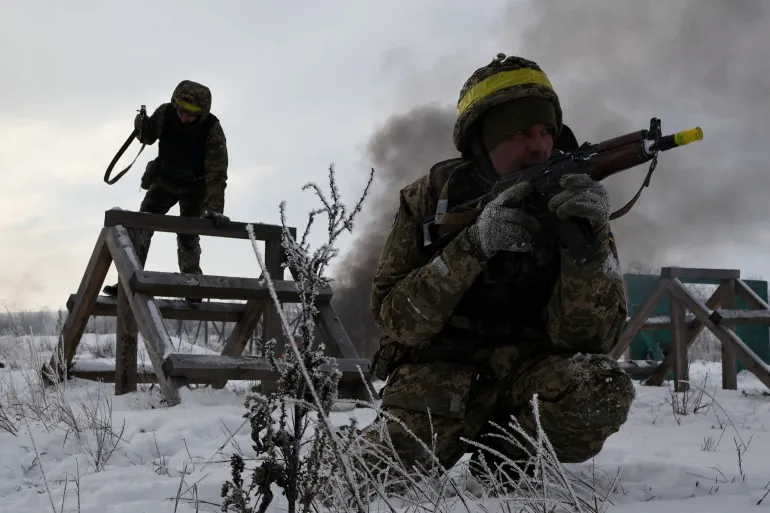
At the close of 2025, the Russia–Ukraine war entered a phase of renewed diplomatic tension. Ukraine accused Russia of deliberately spreading misleading information to prolong the war, despite suffering significant losses in exchange for limited territorial gains.
At the end of December, Russian Foreign Minister Sergey Lavrov claimed that Ukraine allegedly attempted a drone attack near Russian President Vladimir Putin’s residence by Valdai Lake, northeast of Moscow. According to him, 91 long-range drones were used, but Russia’s air defense intercepted them. Lavrov did not disclose whether Putin was present at the time.
Ukrainian Foreign Minister Andriy Sybiha quickly denied the claim, stating no such attack occurred and that Russia failed to provide credible evidence. Russian drone wreckage photos also did not confirm the location, time, or source of the alleged attack.
Russian opposition media and analysts questioned the claim, noting the Valdai area’s highly secure airspace, making such a large-scale drone incursion nearly impossible. Even Russia’s initial and subsequent official statements contained inconsistencies regarding the number and positions of drones.
Washington-based think tank Institute for the Study of War observed that, in cases of Ukrainian attacks, usual evidence such as video, local administration reports, or social media footage was absent in this instance.
The timing was significant: one day before the allegations, Ukrainian President Volodymyr Zelensky met with former US President Donald Trump, receiving assurances of US support for Ukraine’s security. Some European leaders had also hinted at the possibility of ending the war early in 2026. Lavrov’s statements disrupted such optimism, asserting that Russia would reconsider its negotiating position.
On the same day, Putin ordered Russia to seize remaining parts of Ukraine’s Zaporizhzhia region, where most territory was already under Russian control. Zelensky accused Russia of deliberately escalating tensions to avoid peace talks.
While Russia claimed large territorial gains in 2025, independent analysis showed the actual advancement was limited. According to Ukrainian military data, Russia suffered over 400,000 casualties for its limited territorial advances. Even in the last week of 2025, Russia conducted extensive drone and missile attacks across Ukrainian cities. The Ukrainian Air Force reported that most drones and missiles were intercepted.
In summary, even at year’s end, the Russia–Ukraine conflict was defined more by information warfare, mutual accusations, and military pressure than by peace.
Source: Al Jazeera

প্লিজ লগইন পোস্টে মন্তব্য করুন!
আপনিও পছন্দ করতে পারেন
- Apr 11, 2026
Tension over the Strait of Hormuz, Trump warn...
- Apr 11, 2026
NASA’s Artemis–2 mission returns to Earth aft...
- Apr 08, 2026
Two-Week Ceasefire Between Iran and the Unite...
- Apr 04, 2026